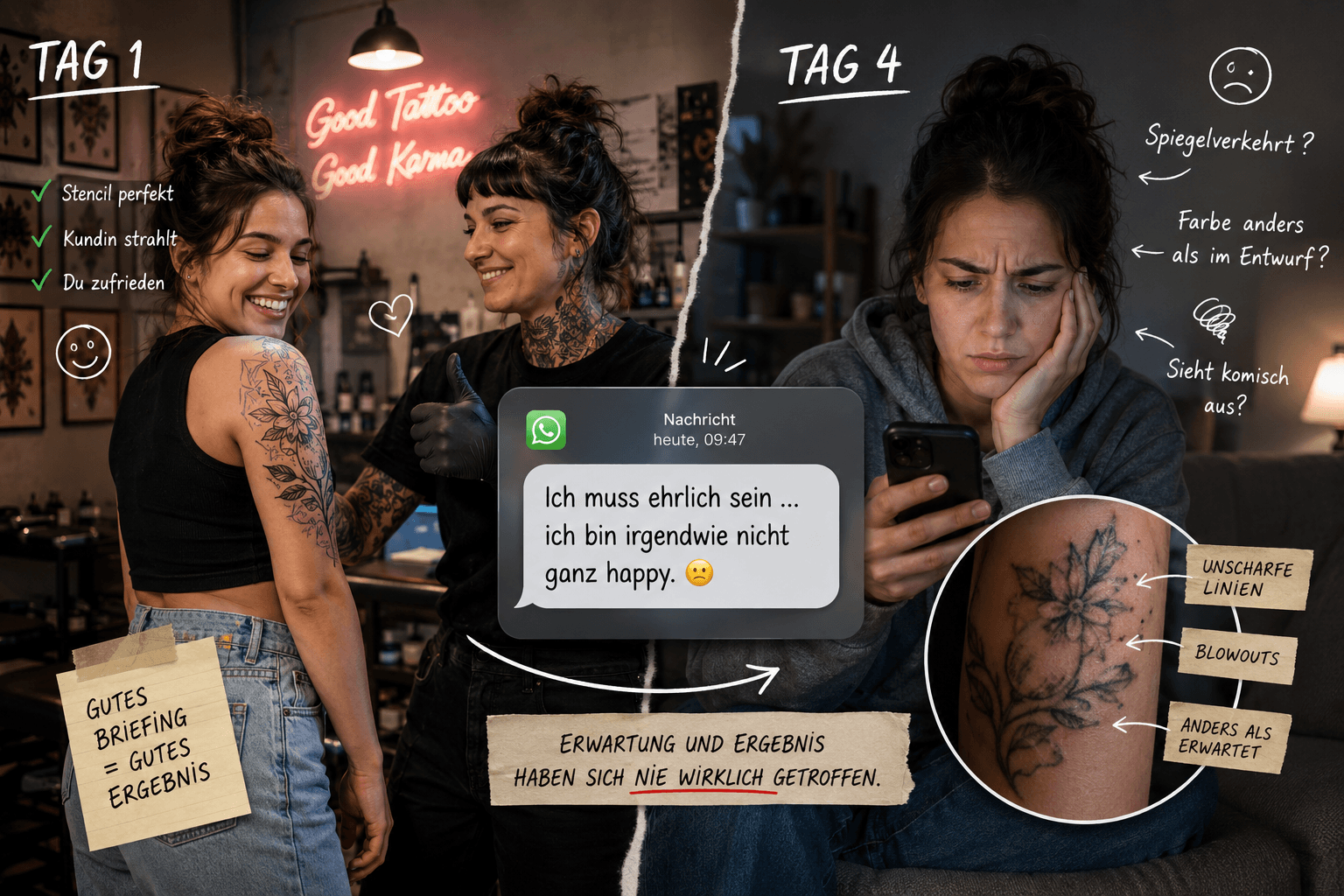
Screenshot Roulette: When "Just Like That" Suddenly Costs €1,500
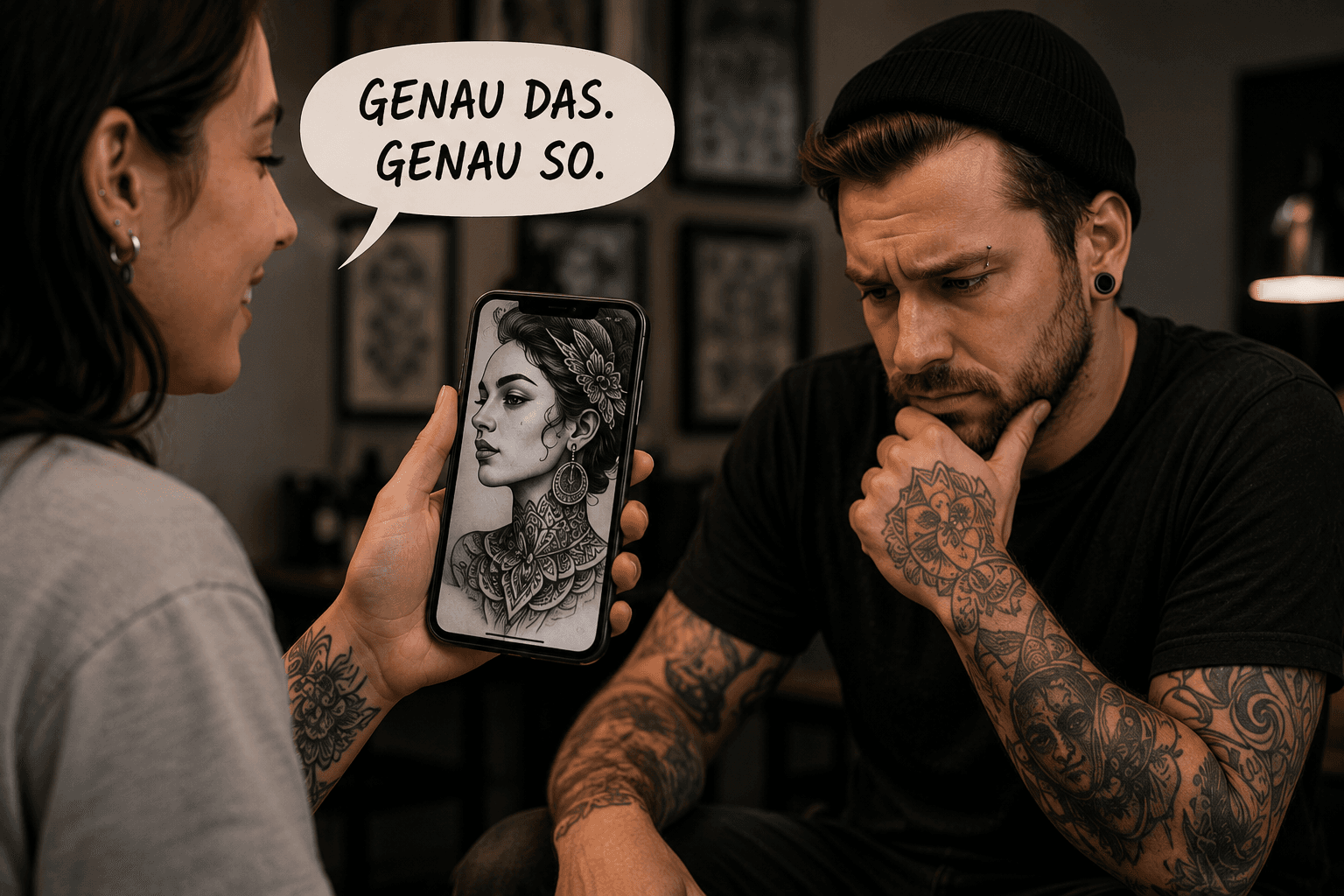
Friday afternoon, a consultation. The client scrolls through her phone, beams as she holds up the screen, and says the sentence that really should set off every alarm bell: "That. Exactly that." On the screen: a screenshot from Instagram, no profile name in sight.
You don't want to lose the booking — rent doesn't pay itself — so you nod. That single nod just cost a colleague €1,500 — plus lawyer and court fees. Ouch. That stings almost as much as a blackout piece on the throat, just without the cool result.
What happened? (Spoiler: it got expensive)
Back in 2020, a tattoo artist posted a portrait motif with very distinctive elements (a neck pattern, an earring, a mandala) on Instagram. Three years later, a client walks into a different studio with exactly that screenshot. The artist there thinks nothing of it, inks it 1:1, and proudly posts the result on his own channel. WITHOUT naming the original creator.
The creator recognizes her own work, calls in a lawyer, and the Cologne district court makes short work of it: €1,500 in damages plus warning-letter costs (ruling of 22 December 2025, case no. 137 C 162/25).
Legal quickie: why "re-inking" isn't a compliment
The court made two things clear that we should all tattoo behind our ears (or onto a forearm):
- Tattoo designs are protected. Full stop. It doesn't have to be an award-winning masterpiece; a "personal intellectual creation" is enough (§ 2 of the German Copyright Act). That applies to the delicate fineline motif just as much as to the bold custom piece.
- You're liable twice over. The tattooing itself is a reproduction (§ 16 UrhG), and posting it on Insta makes it publicly available (§ 19a UrhG). Copy and post, and you commit two infringements at once.
The "but the client wanted it that way" trap
That was the colleague's defense in court — and it's no surprise it lost him the case.
The court is crystal clear: it's your duty as a professional to check whether you're even allowed to use the image. You can't blindly rely on the person in front of you holding the rights to their screenshot. The picture on the client's phone is your risk. ALWAYS.
Especially bitter: because the colleague didn't credit the creator, the court simply doubled the notional license fee (€750). No credit = double the damage.
The good news: your shield
Before you toss your needles: it cuts the other way too, of course. ✅
Your designs are just as protected. If someone copies your flash, the same bill is owed to you: license fee plus an infringer's surcharge. So that you can actually enforce it when it counts, document your drafts (sketches, process photos, posting history). That's exactly what won the Cologne artist her case.
Your "anti-warning-letter routine" (takes 5 minutes)
So your workday stays a breeze and you don't end up working for other people's lawyers, a few pro tips:
- Clarify the origin: With every reference, just ask: where's this from? Your own photo? Pinterest? Another artist?
- Never ink 1:1: Minimal changes often aren't enough legally. Turn the idea into your own interpretation — that's your job as an artist anyway.
- The industry etiquette: Ask the original artist and give credit. It's not just good for your reputation — in case of doubt it also halves the financial damage.
- Terms check: Have your terms confirm that the client holds the rights to any material they bring.
Quick plug: TODA always sends your terms along automatically when you reply to a request. 🤓
Bottom line
The Cologne ruling shows: artists who work cleanly are on the right side of the bill. Whoever clears their references and archives their own drafts has nothing to fear. That leaves more time for what really matters: your art.
Not legal advice — and copyright law varies from country to country. This German ruling reflects a principle that holds in most places (copyright protects original work automatically, no registration required): copying someone else's design — and posting it — is an infringement, and your own work enjoys the same protection. For your own jurisdiction, check with a local lawyer.